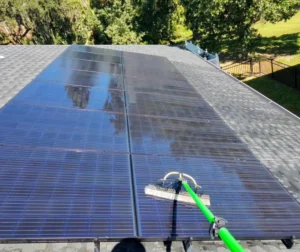
Ever looked up at your roof and thought, “You know, those solar panels could use a good wipe-down“? You’re right, they probably do – but timing is everything when it comes to keeping them clean. Not cleaning solar panels is an often-overlooked aspect of solar panel maintenance, and getting it wrong can cause serious problems.
At Window Cleaning Melbourne Crew, we’ve been around the block a few times and seen our fair share of solar system mishaps. Cracked panels from heat shock, pressure washer disasters and bird poop that’s baked onto the panels so hard it looks like a ceramic tile are just a few of the things we’ve seen. So, here’s the cleaning plan you should be following – and when to hold off if you want to keep your system running efficiently, safely and without breaking the bank.
Hot Days Can Be A Real Problem
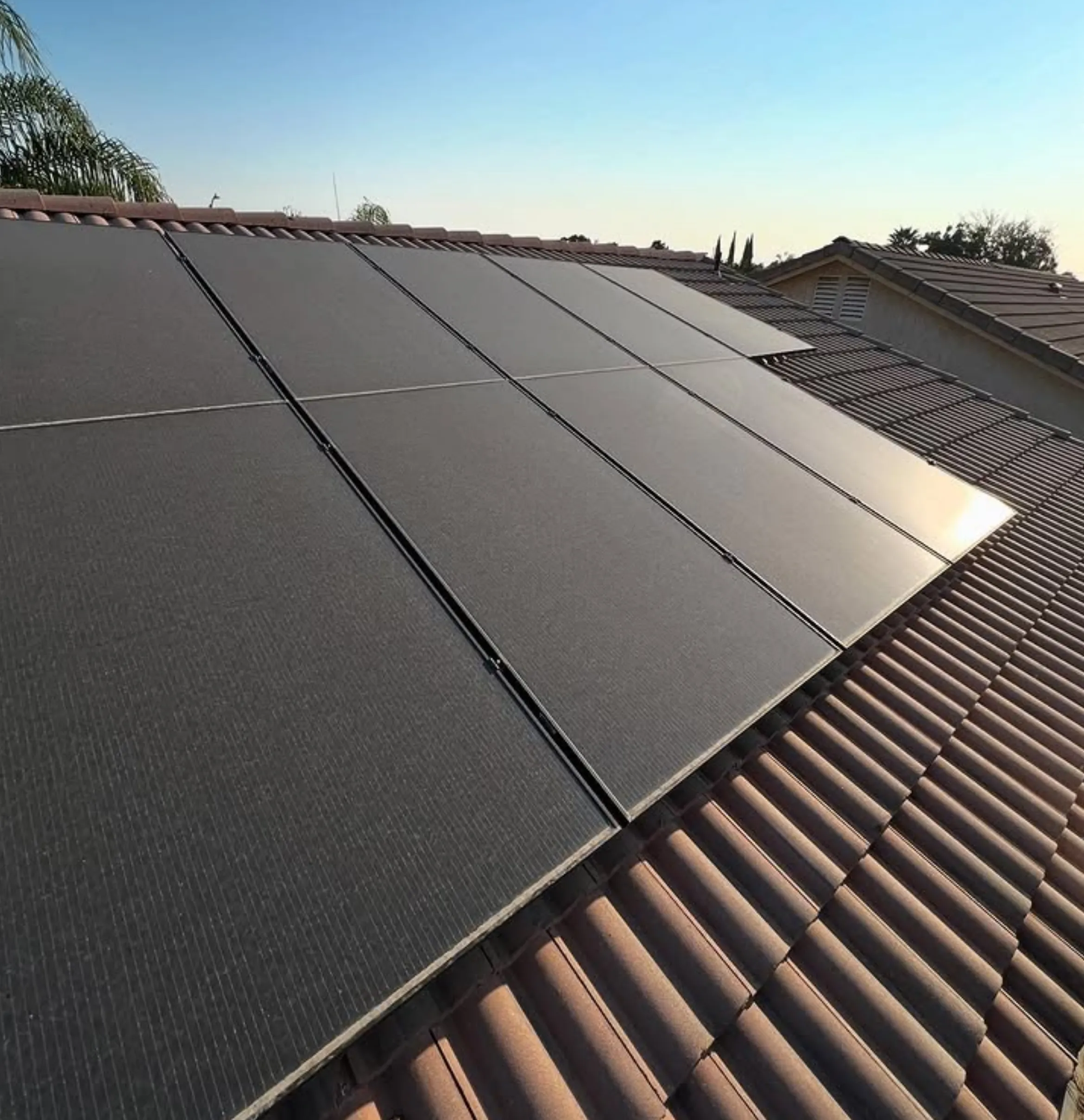
Don’t even think about grabbing the hose when your solar panels are baking in the midday sun. Throwing cold water on a panel sitting at 40°C is a surefire way to cause thermal shock — rapid expansion and contraction that can crack the glass or loosen the seals.
We all know that solar PV systems are built to withstand rough weather, but extreme heat can push even the best panels to their limits. So, what’s the best thing to do? Wait until early morning or after sunset when the panels have cooled down a bit. Trust us, it’s worth the small delay – it’ll help prevent long-term performance problems and keep your warranty intact.
Be Aware of Rainy Days
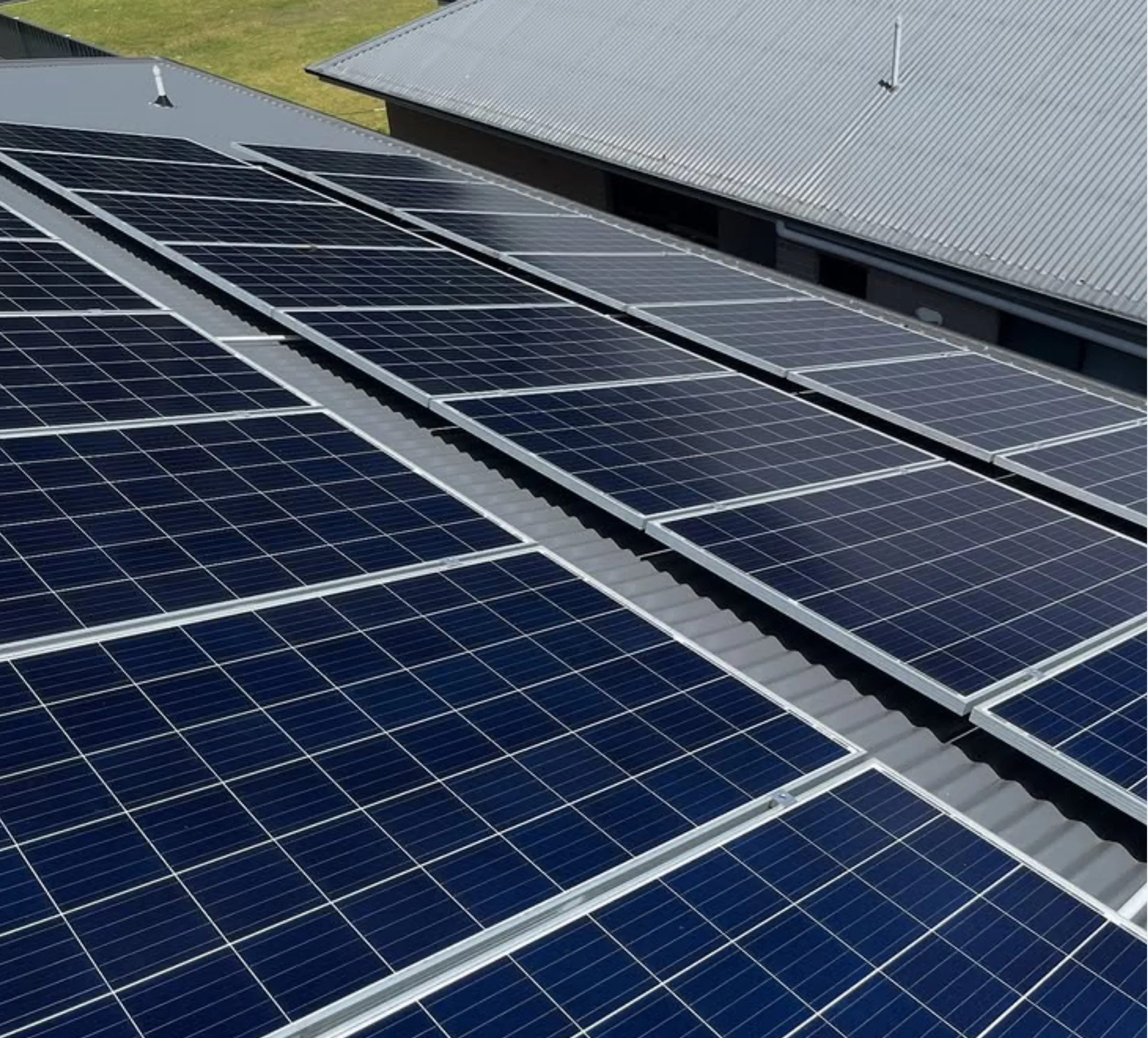
You might think rain is the perfect excuse to skip cleaning your solar panels, but in reality, it’s just rearranging the dirt and grime. When the sun comes out again, all the good stuff – dust, pollen and bird poop – just clings to the glass and causes problems. And if you try to clean them after a downpour, you’ll just end up with streaky sludge.
Give it 24–48 hours after the rain — especially after the cicadas have finished their annual singing in Melbourne — before you start cleaning. That allows the solar cells to dry properly and means your cleaning solution will work without leaving those annoying water spots that cut down your energy output.
Don’t Even Think About Cleaning During A Storm
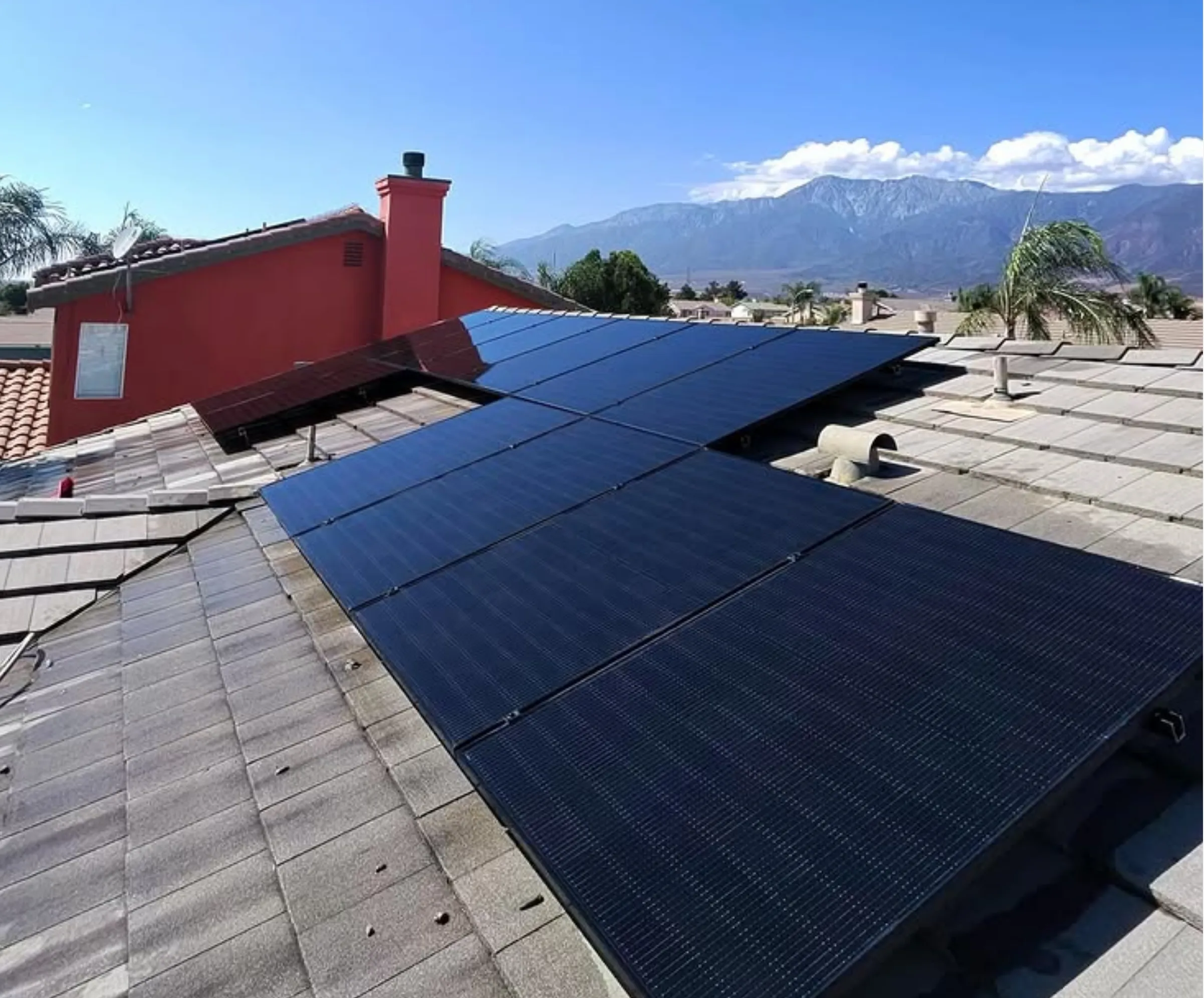
We can’t stress this enough: do not clean your solar panels during a storm. Water, metal poles and live current from your solar installation don’t mix. And it’s not just standing on the ground with an extension pole – lightning and deadly voltages are a real and serious risk.
It gets even worse if your panels or wiring have any micro-cracks or exposed components. Before you start cleaning, take a good look at your system — check for any loose wiring, damaged connectors or error lights on your solar monitoring system. Always follow Energy Safe Victoria‘s advice and disconnect your system properly before you start any hands-on work.
Skip Windy or Dusty Days
Dust and leaf litter are part of life in Victoria, but cleaning on windy days makes things worse. Grit gets airborne and scratches the glass or dulls the surface when wiped.
We’ve seen DIY jobs turn into property value nightmares because someone blasted dusty panels with a pressure washer — which can push water under seals and flood electrical components. For natural cleaning, use soft water, a soft cloth or brush and an extension pole. Gentle methods maintain system efficiency without damaging panel components.
Avoid Freezing Mornings
Cold snaps can turn roof panels into ice rinks. In regional Victoria, frost and frozen dew make cleaning dangerous for both panels and tradies. Spraying warm water on frozen photovoltaic panels can cause cracks or fogging inside the glass.
Wait until mid-morning when the panels have thawed and the ventilation grills have dried out. Safety gear like a harness, gloves and non-slip boots are non-negotiable. Safety equipment isn’t just for tall roofs — even single-storey systems can carry fall risks when slippery.
Don’t Clean During Peak Solar Generation Hours
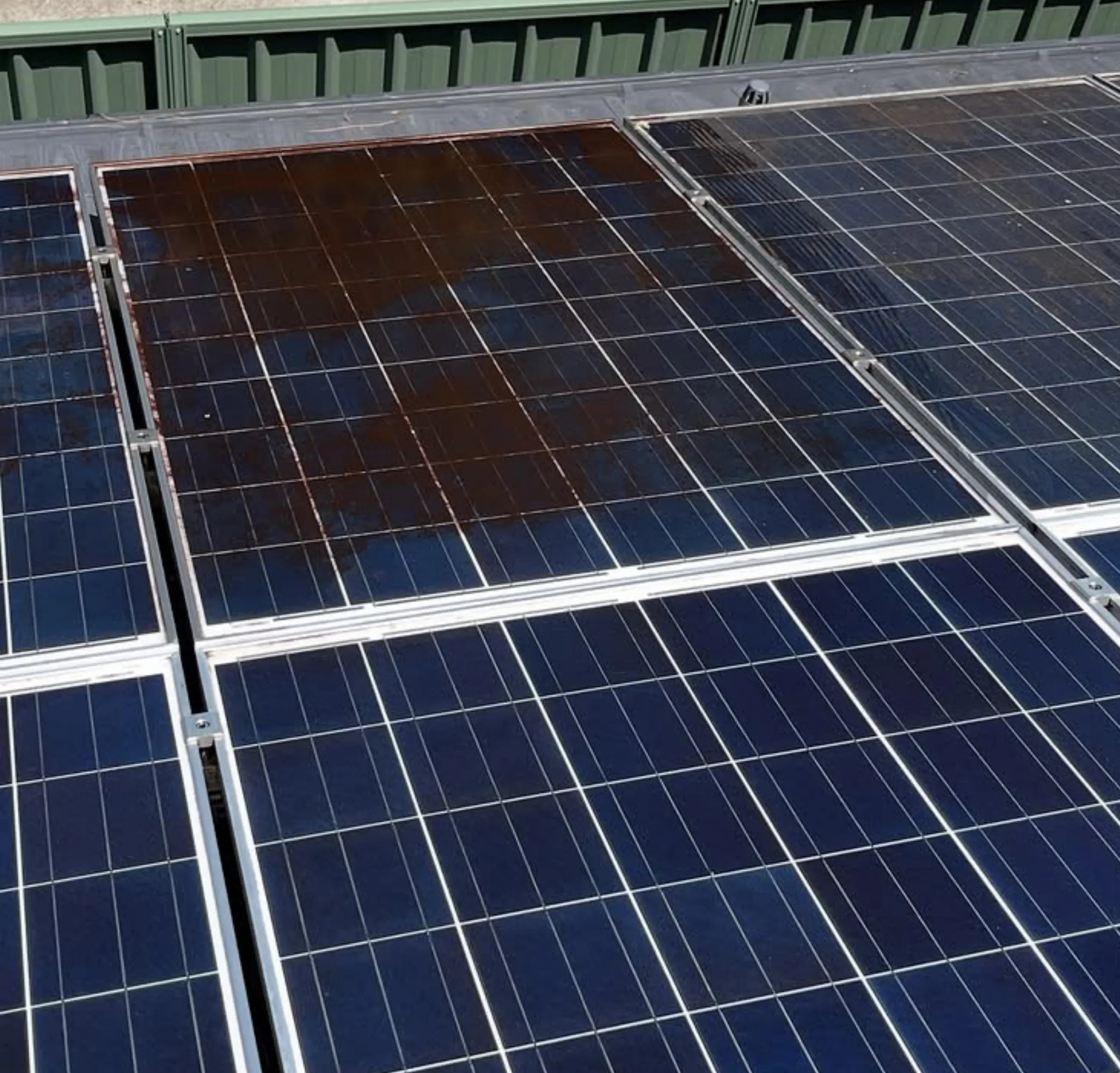
Midday might seem convenient, but it’s when panels are at their hottest and generating maximum voltage. Cleaning during peak generation hours can increase electrical risk and shorten your inverter’s lifespan. Early morning or late afternoon cleans are safer and more effective.
Why Waiting Pays Off
Waiting saves panels — and money. Rushing into cleaning during the wrong conditions can shorten the life of your solar installation and drop energy output. The Clean Energy Council recommends following a maintenance schedule aligned to your region’s seasonal changes rather than cleaning on impulse.
Here’s a quick reference guide we use when scheduling solar cleaning service jobs across Melbourne:
| Condition | Wait Before Cleaning | Reason |
|---|---|---|
| After heavy rain | 24–48 hours | Prevent streaks and sludge |
| After the dust storm | 1–2 days | Let particles settle |
| On a hot roof (>30°C) | Until sunset | Avoid thermal shock |
| Windy day | Until calm | Prevent dust scratching |
| Frosty morning | Until thawed | Avoid cracks and slips |
A study from the Clean Energy Council (Australia) suggests that most households lose less than 5% efficiency annually from unwashed panels — far less than the risk of damage from poor cleaning timing.
Professional Cleaning
Professional cleaning services use soft-water systems, deionised rinsing, and specialised poles that clean without harming your solar panels or wiring.
Certified solar panel cleaning companies also conduct diagnostic checks — inspecting your system service intervals, identifying wiring problems, and monitoring your performance metrics with advanced solar monitoring tools. We often find issues like shading from trees, salt residue, or even nesting animals before they trigger error lights or efficiency loss.
We recently did solar panel cleaning in Aberfeldie, where a client’s rooftop system had lost nearly 10% of its energy output due to dust and bird droppings — proof that a professional clean can restore performance and extend the life of your solar PV system.
Professional cleaning is more than just washing panels — it’s preventative maintenance that protects your solar PV system and your energy independence.
Seasonal Timing Australia
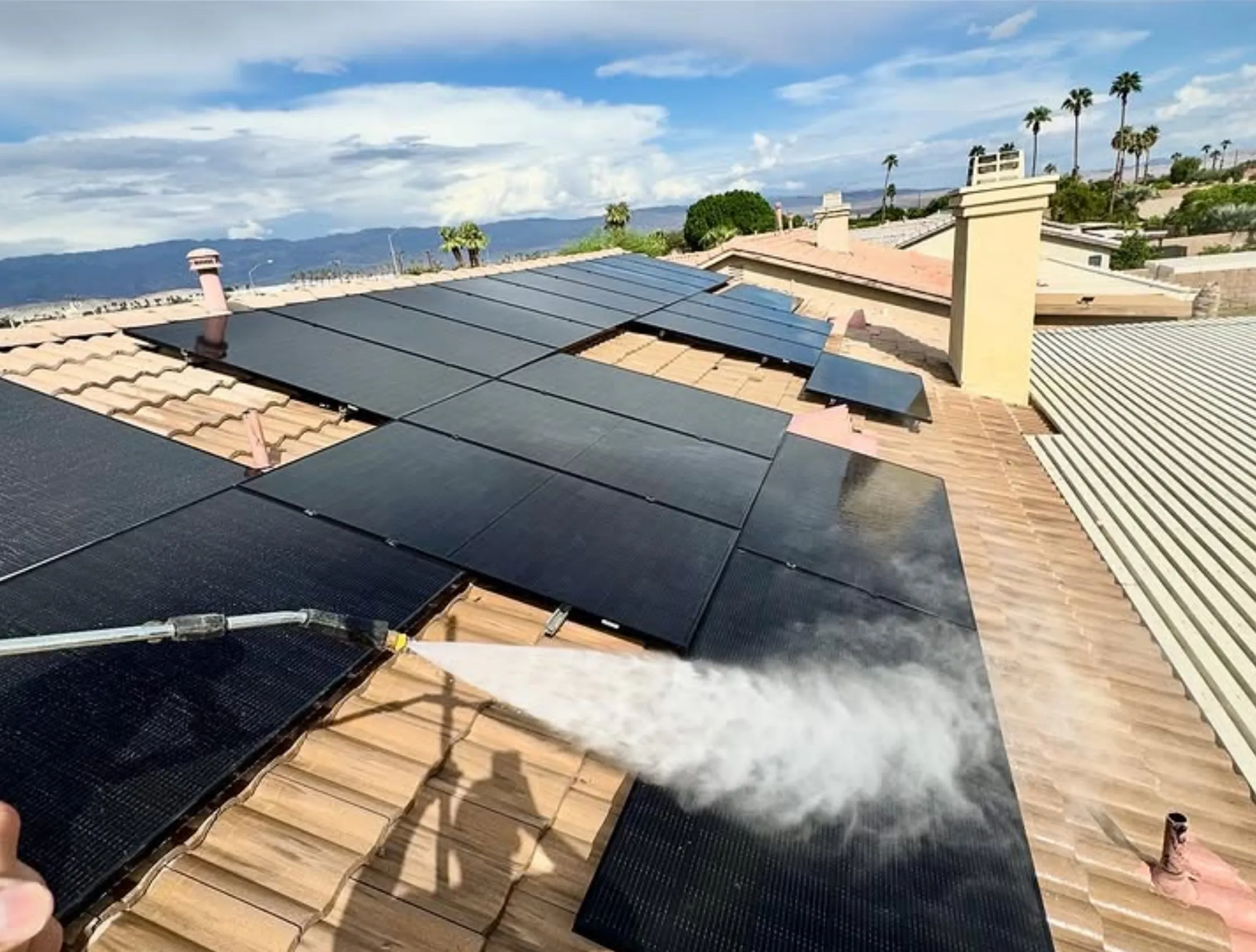
Different regions need different cleaning frequencies and timings:
- Victoria & NSW: Twice a year — spring and autumn — ideal for stable weather and low pollen.
- Queensland & NT: After “the wet,” when humidity and bird droppings peak.
- South Australia & WA: Clean midwinter to clear red dust and coastal salt spray.
- Tasmania: Late morning cleans in winter to avoid frost.
Adjust your cleaning schedule based on local rainfall, cloud cover and panel tilt. In coastal suburbs, salt residue and sea mist can build up more quickly, so quarterly cleans are necessary for optimal performance.
If unsure, a professional can assess your system’s efficiency using performance monitoring systems or the Clean Energy Regulator’s performance metrics to determine whether dirt or grime is causing output loss.
FAQ
Why should I not clean my solar panels in extreme heat?
Because hot glass meeting cold water causes thermal shock, which can crack your solar panels and ruin seals. Clean early morning or after sunset.
Can rain replace regular cleaning?
Not really. Rain just moves dirt or grime around and leaves mineral stains that block sunlight. Use soft water or book a professional clean.
How often should I clean my solar panels in Melbourne?
Twice a year is ideal, more if you live near trees, birds or coastal areas with salt residue.
What tools should I use for safe cleaning?
Stick to a soft cloth, a mild cleaning solution, and an extension pole. Avoid pressure washers and hard brushes.
Why hire a professional cleaner?
Because professional cleaning includes visual inspection, diagnostic checks, and adherence to safety standards from Solar Accreditation Australia and Energy Safe Victoria — ensuring both performance and protection.